Aluminum manufacturer Hindalco Industries Ltd is considering a bid to acquire a U.S. maker of aluminum rolled products as a move to advance the India-based company’s efforts to expand its reach into the automotive and aerospace sectors.
The private equity owners of Aleris Corporation, located in Cleveland, Ohio, ended talks with China Zhongwang Holdings last month due to heightened U.S. national security concerns and now find the company courted by Hindalco, through its U.S.-based subsidiary Novelis, as well as several other firms, including Norsk Hydro of Norway, Japan’s UACJ Corp., and Arconic (formerly Alcoa). Aleris Corporation is valued at approximately $2.5B, although a bidding war could escalate that figure to greater than $3B.
A Mexico-based automotive supplier recently awarded a contract for the design and manufacture of a 1,500 lb/hr mesh belt furnace system for the austenitizing and molten salt quenching of unique components used in the manufacture of its drivetrain systems.
This contract was awarded to Can-Eng Furnaces International Ltd, which has scheduled the project to be commissioned early 2018 in Mexico’s centralized automotive manufacturing corridor. Incorporating several technological advancements for continuous atmosphere processing of products requiring carbon diffusion and quenching via a molten salt system, known as austempering, the new system includes: automated bin-dumping loading, mesh belt atmosphere hardening furnace, salt quench, post-quench wash and rinse system, mesh belt temper oven, and endothermic gas generator.
A Canadian automotive parts manufacturer recently contracted a chain conveyor oven to preheat aluminum billets prior to forging into automotive suspension components under high pressure. This forging process produces high-strength parts that are ideal for applications where performance and safety are critical, but a lighter-weight metal is needed for speed or energy efficiency.
The natural gas-fired indexing conveyor oven, constructed and shipped by Wisconsin Oven Corporation, has a maximum operating temperature of 1,100°F (593° C) and work chamber dimensions of 6’6” W x 23’6” L x 1’0” H. The oven is designed with the capability to heat 1,995 pounds of aluminum per hour and a production rate of 360 parts per hour. The equipment achieved temperature uniformity of +/-10°F (5.6° C) at 1,050° F (565° C) for the last 90 index positions. The patented Expandable Surface™ design includes 2 inches of high-temperature block insulation backed with 4 inches of semi-rigid batt type insulation.
A global engineering solutions firm recently established the next generation in its series of driveshafts optimized for the most popular configurations of heavy-duty commercial trucks.
Mark Wallace, Executive Vice President of Dana Incorporated
Dana Incorporated announced the launch of its SPL® 250 Lite driveshaft line, designed to handle torque ratings up to 25,000 Nm and specifically engineered to reduce noise, vibration, and harshness (NVH) levels. Up to 25 pounds lighter than competitive products, the newly revealed driveshaft will enhance vehicle dynamics without compromising strength.
“The lower numeric axle ratios required to support engine downspeeding and improve fuel efficiency can cause significant stress to the drivetrain and alter harmonics in driveline components,” said Mark Wallace, executive vice president of Dana and president of Dana Commercial Driveline Technologies. “Excessive vibration leads to unplanned downtime and driver fatigue on the road. The SPL 250 Lite driveshaft leverages proprietary precision manufacturing methods that ensure no NVH issues while delivering a smooth ride. It also reduces weight without sacrificing performance or durability.”
The SPL 250 Lite driveshaft widens the range of applications with fewer components to reduce weight and improve installation by OEMs.
A Swedish supplier of rolled aluminum products that has operations in Sweden, China, and the U.S. recently announced an expansion project that will incorporate investment in heat treat equipment, including annealing furnaces.
Johan Menckel, Gränges CEO
Gränges of Stockholm, Sweden, will invest $110 million (U.S.) to increase the capacity of its aluminum rolling operation in Huntingdon, Tennessee, from 160K tons to nearly 200K tons per year, creating 85 permanent full-time jobs and servicing its North American market with light gauge foil, automotive heat exchanger materials, and heating, ventilation, and air conditioning (HVAC) applications. This is the company’s second major investment in Huntingdon since 2000.
“The expansion in Huntingdon marks the next step in our strategic growth plan for the North American market. Gränges has built a strong reputation in the aluminum rolling industry, and this expansion allows us to further support our customers’ growth”, says Gränges CEO Johan Menckel. Other expansion projects will include buildings, casters, cold rolling mills, and
slitters.
Patrick Lawlor, Gränges Americas President
“The investment represents a long-term commitment to our customers, employees, and shareholders as we grow in support of our strategic markets”, says Gränges Americas President, Patrick Lawlor.
The expansion was supported by Tennessee (TN) Governor Bill Haslam, the TN Department of Economic and Community Development, Tennessee Valley Authority, and local Huntingdon Officials.
“In TN, we take pride in the fact that our hardworking residents still make things,” said Tennessee Governor Bill Haslam. “The Gränges facility is a vital part of the Carroll County community and I’d like to thank Gränges for committing to create new jobs in Huntingdon and bringing us closer to making TN the No. 1 location in the Southeast for high-quality jobs.”
Innovative product carrier concepts can save light metal foundries millions by massively reducing alignment work and energy costs while increasing throughput and process reliability.
Furnace builders often see product carriers as a necessary evil which is why the savings that can be achieved by using optimized carrier concepts are often underestimated. In contrast, StrikoWestofen, located in Gummersbach, Germany, pursues a holistic, process-oriented heat treatment approach in which the interplay of furnace system, quenching unit, and product carrier is fine-tuned.
Rudi Reidel, General Manager, StrikoWestofen
Heat treatment is a complex multi-layered process in the manufacture of light metal castings and forgings. Its importance has increased in the past few years, particularly in the automotive industry. Today, heat treatment is applied not only to heavily stressed components such as engine parts or wheel rims, but also to safety-critical structural components found in body and chassis. Heat treatment aims to optimize material properties such as ductility, hardness, and tensile strength, as well as eliminating residual stresses. The process is carried out in three stages: solution annealing, quenching, and aging. Throughout all three stages, the treated parts are mounted on product carriers.
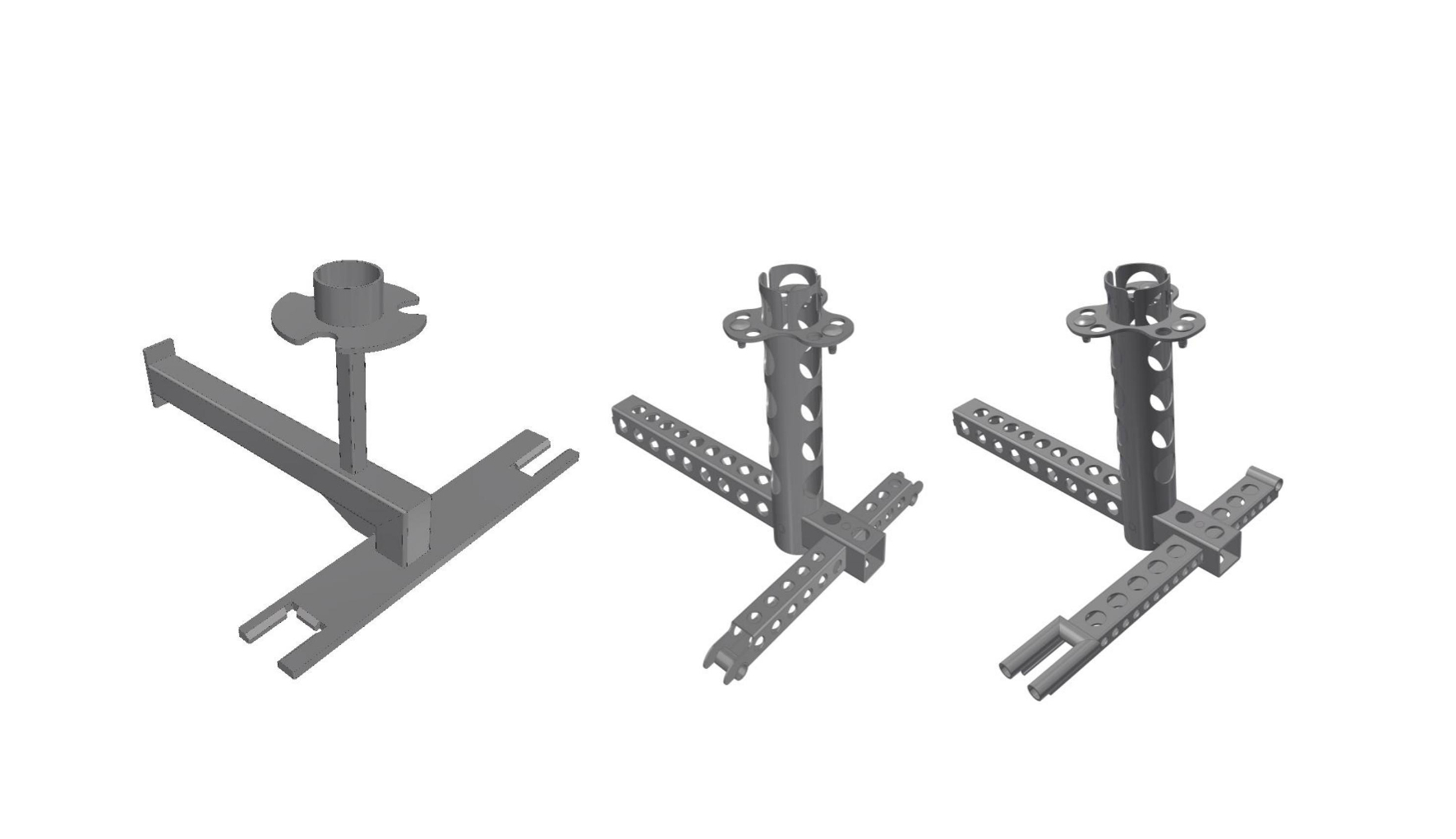
Product carriers are considered to be the starting point for the development of a heat treatment system at StrikoWestofen. Looking at the system holistically, they are at the very heart of any heat treatment process. “[O]ur team has completely redesigned the product carrier, built countless prototypes and carried out a large number of tests. The outcome is very promising,” said Rudi Riedel, manager of StrikoWestofen. The resulting modern product carriers are designed to realize considerable savings compared to conventional models. These savings result from reduced alignment work, increased throughput, improved process reliability and a remarkably low energy consumption.
StrikoWestofen (Gummersbach) was able to reduce the weight of product carrier mountings from 4 kg to ca. 2.5 kg.
Reduced alignment work
Heat treatment releases residual stresses which often lead to distortion of components. In order to match the tolerances specified by the end customer, any distortions must be reduced through manual or mechanical alignment work. The cost arising from this alignment work can be considerable, but it can be reduced by using optimized product carriers. The special design of the frame mountings ensures an even transfer of the heat to the component and its uniform cooling using water, air, or a mixture of air and water. Simulation, meticulous measuring, and sophisticated heat treatment tests help to ensure consistent quality and precise design of the product carriers.
Repeatable processes and increased plant capacity
Packing density and therefore throughput of the heat treatment system can be increased through fewer profiles and fixtures, which are also tailored to the component they are supporting. Modern additive manufacturing processes and precision measuring of each individual product carrier prior to delivery guarantee repeatability and stability of the heat treatment process. Instead of heavy frame profiles, StrikoWestofen relies on weight-reduced frames for its product carriers. This means less mass overall needs to be heated up and cooled down again, thus saving energy as well as dramatically reducing solution annealing and quenching times. Finally, the carriers are made from stainless steel instead of normal steel, preventing corrosion and surface rust and thereby increasing durability.
“Product carriers are an often underestimated but essential component of the heat treatment process. Innovative developments in this field make an important contribution to the reduction of the costs per casting and help our customers to maintain their competitive advantage in dynamic global markets,” noted Reidel.
A Korean automotive parts manufacturer recently had an NX-1230 potential-controlled nitriding system installed for processing automotive springs.
Previously directing its nitriding processes to outside suppliers, Daewon, Corp., commissioned the system from Nitrex Metal, recognizing that its interests would be better served by performing the nitriding in-house. Daewon supplies automotive parts to Hyundai, Kia Motors, GM, Chrysler, Volkswagen, and other global automakers.
Nitreg® nitriding of springs allows fatigue resistance for longer service life in automotive use. The technology also maintains tight dimensional tolerances (no distortion), uniformity from part to part, and repeatability between production runs. The system is capable of processing a load capacity up to 11,570-pound (5250-kg) and complies with the nitriding requirements laid out by AMS2759/10A.
A new aluminum rolling entity located in the industrial hub of Ulsan, South Korea, is the result of a global joint venture project designed to support the increasing demand for high-strength and lightweight aluminum for automotive and specialty products including electronics and building materials in Asia. This comes four years after a major expansion at the site that included a new three-stand hot finishing mill, as well as a pusher furnace and annealing furnaces.
Ulsan Aluminum Ltd. was formed by Novelis, the world leader in aluminum rolling and recycling, selling to Kobe Steel, a producer of aluminum rolled products in Japan, its ownership interest in its Ulsan, South Korea, facility for $315 million. Novelis and Kobe Steel together own the Ulsan Aluminum Ltd. facility, with each company remaining responsible for its own metal supply and commercial relationships.
All 600 employees at the plant are now employed by Ulsan Aluminum. Novelis’ interest in Ulsan Aluminum will remain a key part of its Asian manufacturing interests, which also includes the Yeongju facility in South Korea and the Changzhou facility in China.
“This strategic partnership further supports Novelis’ continued commitment to growth in the Asian automotive industry and creates new capabilities to meet the increasing demand for aluminum sheet,” said Sachin Satpute, President of Novelis Asia. “Through an increase in operational efficiencies and process enhancements, this partnership will provide our global customers greater access to the numerous benefits of aluminum.”
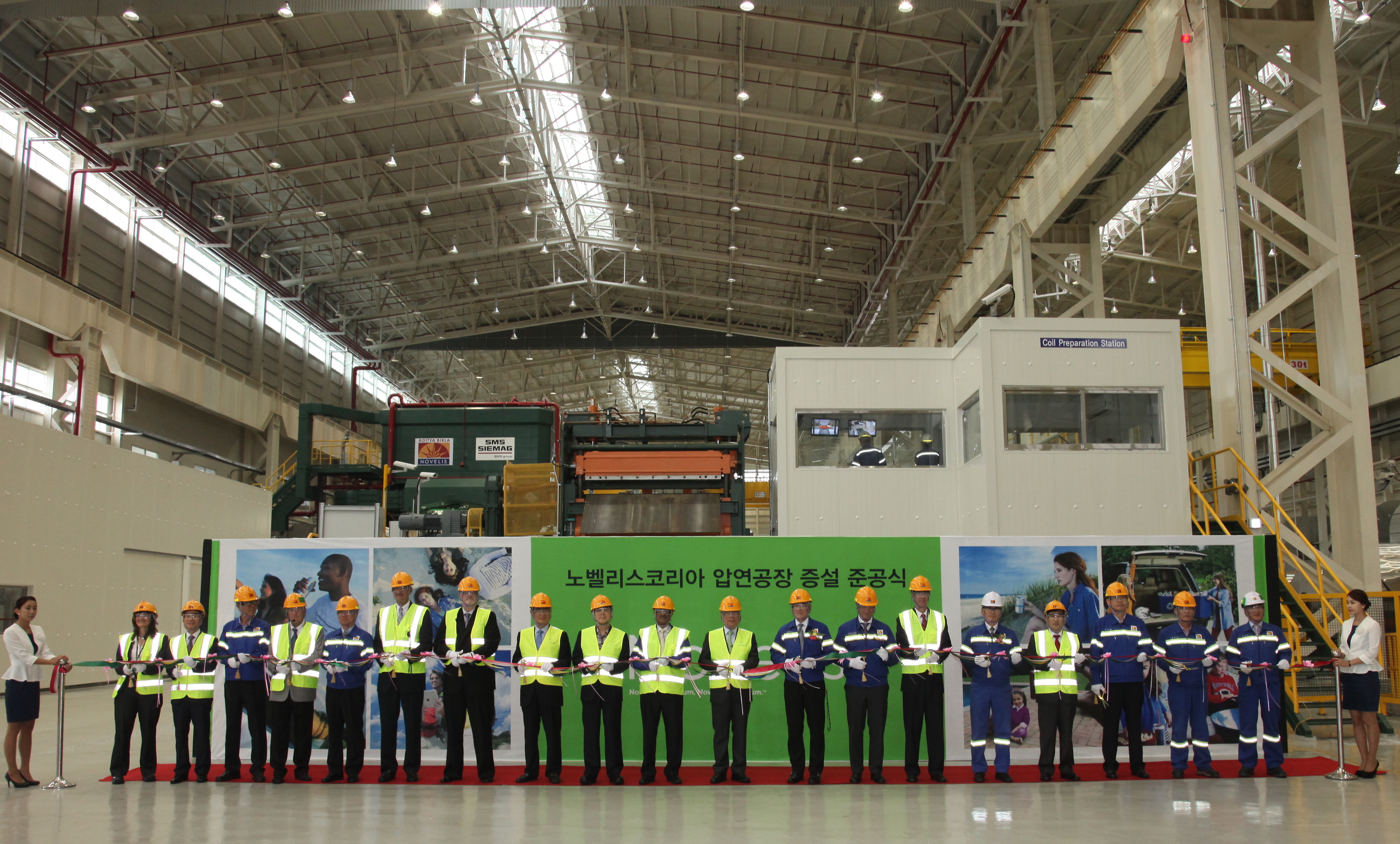
Ulsan facility officials at groundbreaking of furnace expansion, 2013.
“Ulsan Aluminum is committed to providing first-class rolled aluminum products and services to benefit our customers in the region. We will continue to operate with a high-quality and safety-first mentality, and will support the local market with innovative aluminum products,” said Jerry Quick, President and CEO of Ulsan Aluminum Ltd.
A Japanese aluminum manufacturer and a rolled aluminum supplier for heat exchangers headquartered in Stockholm, Sweden, have recently signed a letter of intent as the first step in forming the joint establishment of a new production facility for sheet materials of automotive heat exchangers in North America.
Mitsubishi Aluminum Co, based in Tokyo, and Granges are negotiating the final terms of an agreement in response to a growing demand for advanced aluminum materials for brazed automotive heat exchangers in North America. Lighter-weight aluminum is becoming more popular for automotive body structures, particularly in the U.S., in order to meet stricter emissions standards. In addition, there is a demand by manufacturers of automotive heat exchangers in North America for a local supply of clad materials, i.e., composites of two or more dissimilar metal materials.
Gränges operates facilities in the U.S., China, and Sweden and holds the world’s top market share in sheet materials for automotive heat exchangers (estimated at 20%). In addition to co-founding the base in North America with Gränges, the Japanese group will consider establishing an extensive range of business partner relationships with Gränges.
“The agreement with Mitsubishi Aluminum marks a start for a long-term partnership in North America. We will leverage our strengths and together capture opportunities in the market for advanced aluminum products to mainly the automotive industry, for brazed heat exchangers but also for other products,” said Gränges CEO Johan Menckel.
“We remain focused on growing our presence in automotive heat exchanger materials in North America. We see many synergies with Gränges, most importantly, absolute focus on research and innovation to meet the growing demands of our automotive customers. We are excited and look forward to a long-term partnership with Gränges,” said Akio Hamaji, President and CEO of Mitsubishi Aluminum Co.